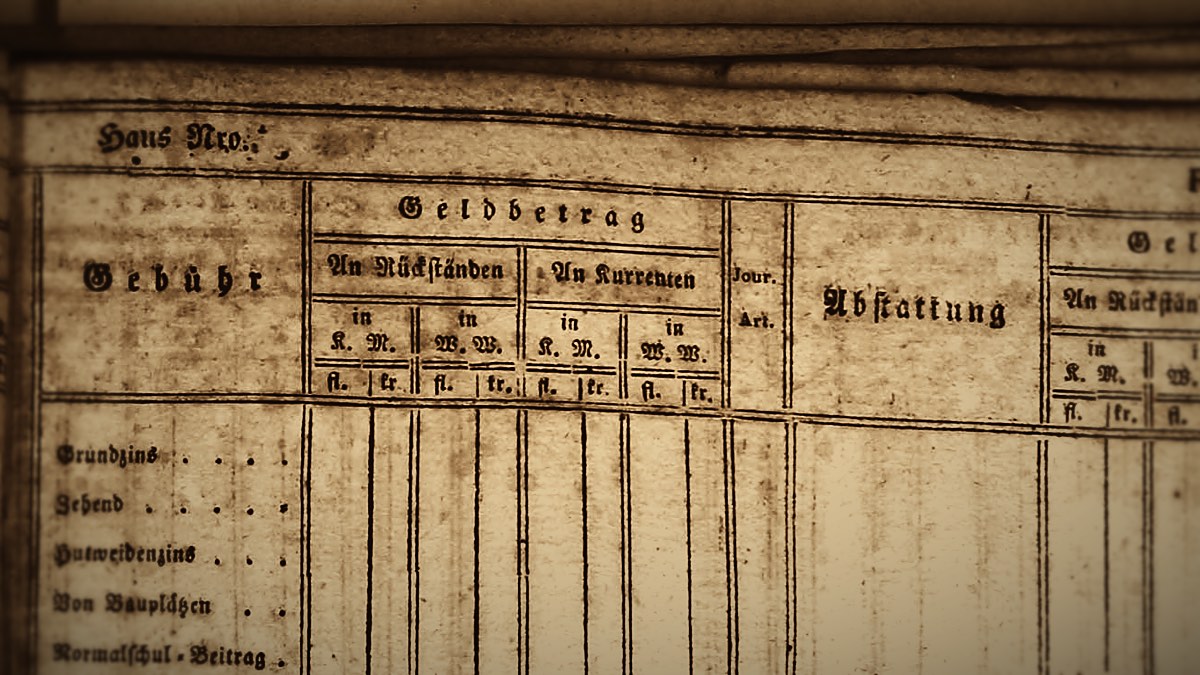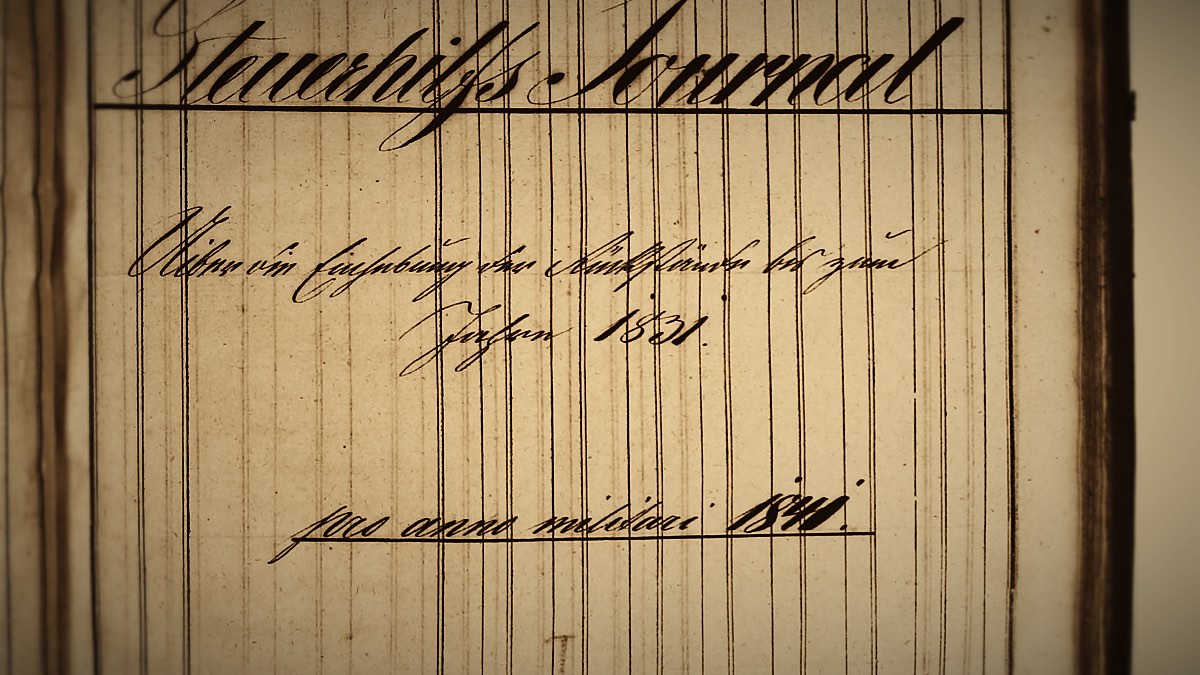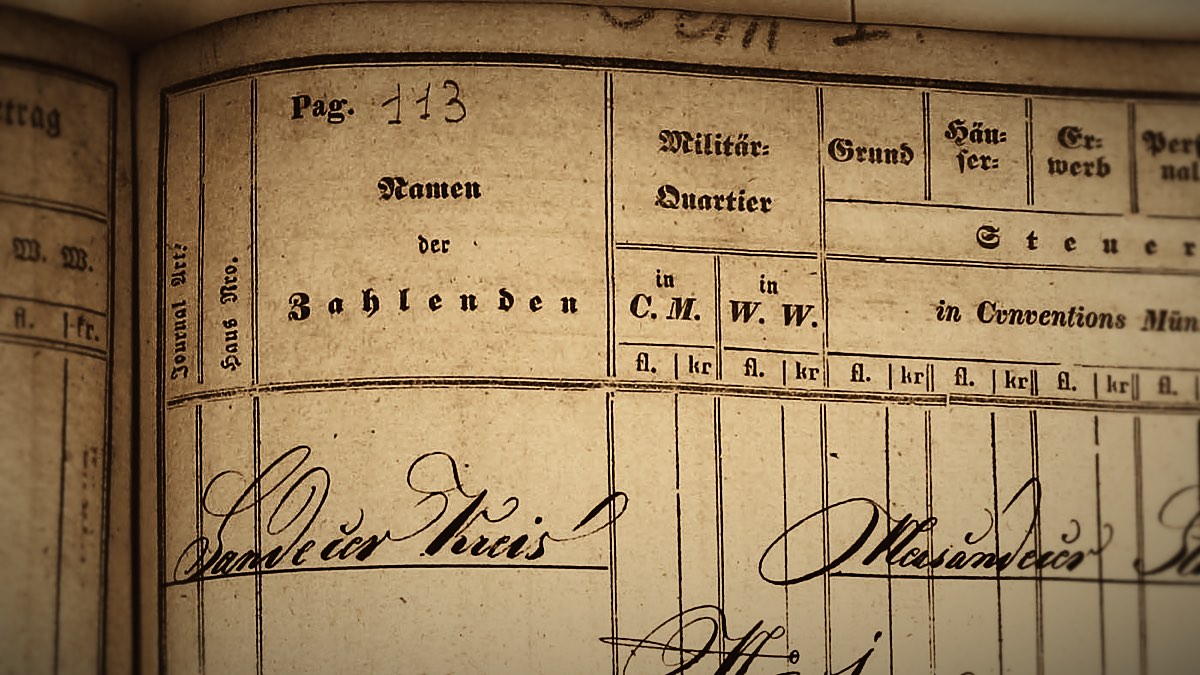
Which Jewish families paid taxes in Sanz in the second quarter of the 19th century? The town's tax books cannot answer that completely, because they record payments, not people. But they do show which Jewish family names the clerks wrote down, how often, and in how many spellings. Here is what the index shows.
How the Jewish names were picked out
The index holds 8,858 family names in all. To find the Jewish ones, an AI pass looked at each family name together with the first names written with it, and with the word Jude (Jew), which clerks sometimes added beside a name. It marked 301 names as Jewish and 640 more as likely Jewish: 941 in all. For each of them it also suggested a Yiddish spelling.
Each of those 941 names then had a second look: one original picture of the name was opened and the family name was read again, letter by letter. For 647 names the second reading agreed exactly, and for 288 more it was close.
This is careful work, but it is still machine work. A Jewish family can be missed and a non-Jewish one included, so the list of family names also has an "All names" switch. Of the 941 Jewish names, 417 appear more than once. The other 524 appear only once; the list shows them when you choose "Also show names seen only once".
How often they appear
In the tax books of 1825 to 1852, about one name line in six belongs to a family name marked Jewish. That is a count of lines, not of people. Every payment is a line, so a family that paid often appears often, and a family that paid little may hardly appear at all.
For a sense of scale, the Sanz memorial book (Sefer Sandz, edited by Raphael Mahler) counts 832 Jews among 2,887 inhabitants in 1799, and 1,138 among 3,629 in 1808. It gives 3,315 Jews in 1857. It also describes how, in the years after 1849, Jews could live in the suburbs but not in the center of town, except on one street, until an imperial order of 1860 lifted those limits (in Sanz the matter was finally settled in 1861).
The most frequent names
These are the sixteen most frequent family names that the list marks as Jewish with high confidence, the most frequent first. Each name links to its family page, where you can see the people written with it. The Yiddish spelling is the one shown in our list.
- Hollender: the most frequent family name in the whole index, Jewish or not. Also written Hollander, Holländer and Holender. In Yiddish: האלענדער
- Ehrlich. In Yiddish: עהרליך
- Langer. In Yiddish: לאנגער
- Herbst. In Yiddish: הערבסט
- Buxbaum. In Yiddish: בוקסבוים
- Lustig. In Yiddish: לוסטיג
- Birnbaum. In Yiddish: בירנבוים
- Engländer. Also written Englender and Englander. In Yiddish: ענגלענדער
- Kanengiesser. Also written Kanengieser and Kannengiesser. In Yiddish: קאנענגיסער
- Landau. In Yiddish: לאנדוי
- Wildfeuer. In Yiddish: ווילדפייער
- Deutelbaum. Also written Teutelbaum and Daitelbaum. In Yiddish: דייטלבוים
- Sinay. Also written Synay, Synai and Sinaj. In Yiddish: סיני
- Grün. Also written Grien. In Yiddish: גרין
- Springer. In Yiddish: שפרינגער
- Lax. Also written Lachs and Laks. In Yiddish: לאקס
Under most of these names the first names are typically Jewish, such as Gerson, Chaim, Abraham or Hersch. Under a few, though, the books also have first names such as Mathias, Heinrich or Maria. A family name alone does not settle who a person was, so a single line can still belong to someone else.
Many spellings, one name
A name in these books rarely has a single spelling. The clerks wrote what they heard, and German and Polish spelling habits mixed on the same pages:
- i, y and j change places: Sinay, Synay, Synai, Sinaj.
- Polish spelling appears beside German: Szwarz beside Schwarz.
- The same sound is written x, chs or ks: Lax, Lachs, Laks.
- Umlauts come and go: Engländer, Englender, Englander.
- Single and double letters vary: Kanengieser, Kanengiesser, Kannengiesser.
The list groups such spellings under one family name. The normal search also treats i, y and j, w and v, and ch, ck and k as the same, so a search for one spelling finds the others. It even catches some names that sound alike: a search for Teitelbaum also finds Deutelbaum, though the books cannot tell us whether the two are one family.
Sometimes the list adds a name of our own choosing beside the spelling in the books. The family most often written Kögel is listed as Kögel (Kugel), with the Yiddish קוגל. The books also write it Kugler, Kegel and Kogel.
Finding your family
- Browse the family names, in English A to Z or in Yiddish from alef to tav. The list shows Jewish names by default; one click shows all names.
- Search for a spelling. The search shows names only; the full details of a line come with the page you order.
- Can't find your family? Ask us, and we will look for you.
The names in the Sanz records were read from old handwriting with the help of AI and can be wrong; the page itself is the record.